Sodium Lactate vs Salt in Cold Process Soap for Harder Bars
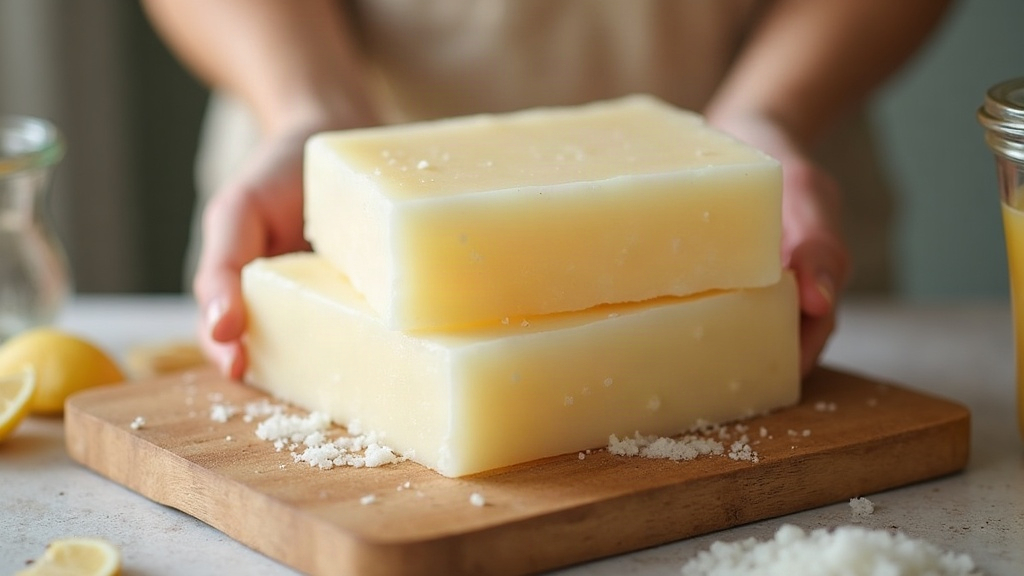
If you’ve ever fought with a soft, sticky bar that refused to pop out of the mold, or sat around for weeks waiting for a batch to firm up enough to use, you’ve probably run into two go-to fixes: sodium lactate and salt. Both will harden your bars, sure, but they get there in completely different ways and leave you with completely different bars. For most soapers, sodium lactate wins out. It hardens without messing with texture. Salt, used in true salt bars, gives you something rock-hard and dense with a very particular feel, but it’s a far less forgiving process to pull off.
What Sodium Lactate Does in Cold Process Soap
Sodium lactate is a liquid salt made from fermented sugar, usually corn or beets. It’s added to cooled lye water, typically at about 1 teaspoon per pound of oils (somewhere around 1-3% of oil weight).
Here’s what it actually does for you:
- Faster unmolding. Bars come out clean in 1-2 days instead of the usual week-long wait.
- Harder, longer-lasting bars. Less turning to mush in a wet soap dish.
- No texture change. Lather, scent throw, bar feel, all of it stays exactly like your standard recipe.
- Helps with liquid soap too. In hybrid bars it can help things dissolve more evenly.
How to Use It
Add it to your lye solution once it’s cooled down, not while it’s still hot. High heat can eat into its hardening power. Stir it in until it’s fully dissolved, then move on to combining with your oils.
What Salt Does in Cold Process Soap
Salt (plain sodium chloride) has been used in soap making for ages. Salt bars are really their own category: often built on very high coconut oil percentages, sometimes 80-100%, with finely ground salt stirred directly into the batter or pressed into the mold.
What you can expect from a salt bar:
- Extremely hard and dense. Some soapers genuinely describe them as feeling like a chunk of stone.
- Mineral, almost detergent-like lather. Think tight, dense foam rather than big, fluffy bubbles.
- Fast trace. Salt speeds up saponification, so you’re working against the clock.
- Risk of separation or grainy texture if the salt doesn’t fully dissolve or spread evenly through the batter.
- Not great for fancy swirls. The speed of trace kills most design options before you even start.
Despite the heavy coconut oil load, plenty of people find salt bars less drying than you’d expect (the salt changes how the lather behaves on skin). That novelty factor is part of why people love them. But they do demand more hands-on experience than a standard batch.
Sodium Lactate vs Salt: Side-by-Side
| Factor | Sodium Lactate | Salt (Salt Bars) |
|---|---|---|
| Hardness increase | Moderate-high | Very high |
| Texture change | None | Dense, hard, different lather |
| Ease of use | Easy, beginner-friendly | Advanced, needs practice |
| Trace speed | Normal | Much faster |
| Best for | Everyday CP soap, loaf molds | Novelty/specialty bars |
| Risk of mistakes | Low | Higher (graininess, fast trace) |
Which Should You Choose?
- Go with sodium lactate if you want harder bars without touching your recipe’s lather, scent, or overall character. It’s the safer bet, predictable, and plays nicely with pretty much any cold process recipe you already use.
- Go with salt if you’re deliberately making a salt bar as its own product, chasing that mineral lather and stone-hard texture that’s often sold as a spa or specialty item.
Common Mistakes to Avoid
- Adding sodium lactate to hot lye. Let it cool first, or you’ll lose some of the hardening effect.
- Over-salting the batch. Too much salt and you’ll end up with a crumbly bar or a grainy surface.
- Skipping the water discount adjustment for salt bars. They usually need more water up front just to buy you time before trace speeds up.
- Treating salt bars like regular CP soap. They cure on their own timeline and punish you fast if you try fancy swirl work.
Final Thoughts
For nearly everyone making soap at home, sodium lactate is simply the easier, more flexible hardening additive. It gets bars out of the mold faster and keeps them in better shape over time, all without changing what the soap actually is. Salt is a different animal entirely. It’s less an additive you sprinkle in and more a whole different approach to soap making, one that’s worth exploring once you’ve got the basics of cold process down cold. Start with sodium lactate if you want reliable, repeatable results. Save salt bars for when you’re ready to chase something more specialty, and a little more unpredictable.