Castor Oil vs Sweet Almond Oil for Creamy Stable Lather in Soap
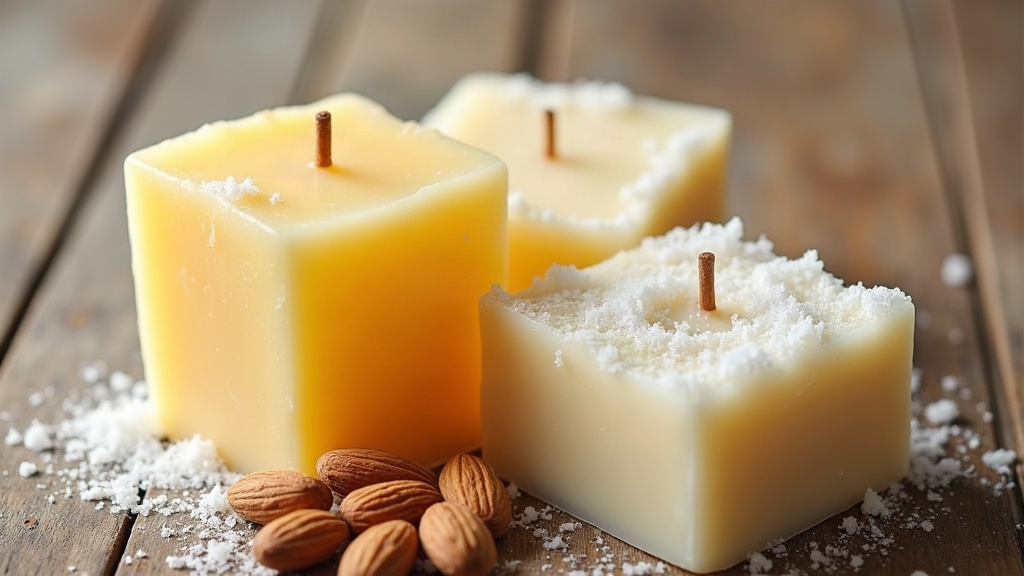
If you’re after big, fluffy, long-lasting bubbles in a handmade bar, castor oil wins hands down over sweet almond oil. Castor oil is a genuine lather booster, the kind that whips up thick, stable foam, while sweet almond oil plays a totally different role: it conditions skin but does almost nothing for bubble structure. Once you understand why each oil behaves the way it does, you can actually design a recipe on purpose instead of guessing and hoping for the best.
Why Lather Quality Depends on Oil Chemistry
Lather comes down to the fatty acid makeup of whatever oils you’re using. Different fatty acids give you very different kinds of bubbles:
- Ricinoleic acid (this makes up roughly 85-90% of castor oil) is a weird one chemically, and it’s responsible for that thick, creamy, almost whipped-cream-like lather you don’t get from any other common soaping oil.
- Oleic acid (around 65-70% of sweet almond oil) is all about moisture. On its own it barely lathers at all. Its job is conditioning skin and leaving that silky after-feel people love.
- Lauric and myristic acids, the ones you get from coconut oil, produce big, fast bubbles that pop up quickly but don’t stick around as long.
- Stearic and palmitic acids (found in tallow, palm oil, cocoa butter) mostly add hardness to the bar, with just a touch of stable lather thrown in.
Castor oil really doesn’t fit the usual “cleansing oil” or “conditioning oil” boxes most soaping oils fall into. It occupies its own category, prized almost entirely for what it does to lather.
Castor Oil: The Lather Booster
Ask any experienced cold process or melt-and-pour soap maker why they keep castor oil on the shelf, and lather is the answer nine times out of ten:
- Boosts bubble volume. Add castor oil to a recipe and you’ll notice more bubbles right away compared to the same formula without it.
- Stabilizes lather. Bubbles hold up longer instead of fizzling out in a minute, especially when castor oil is paired with coconut oil.
- Adds a creamy texture. Instead of thin, watery suds, you get something dense and almost silky to the touch.
- Doubles as a humectant in lotion bars and lip balms, so it’s not just a soap ingredient.
Usage rate: Most soap makers stick to 5-10% of total oils. Push past 15-20% and things get tricky: the batter can turn sticky, trace slows down, and the finished bar may end up far too soft.
Downside: Use it alone (a 100% castor oil bar, sometimes nicknamed “Zote-style”) and you’ll get a soap that stays soft almost indefinitely, feels slimy in the mold, and takes forever to cure properly. Nobody really makes a pure castor bar for everyday use.
Sweet Almond Oil: The Skin Conditioner
Sweet almond oil earns its spot in the recipe for a completely different reason, and it has nothing to do with bubbles:
- Loaded with oleic acid and vitamin E, it leaves skin genuinely soft and hydrated.
- Delivers that silky, conditioning after-feel rather than any real foam.
- On its own it makes for a soft bar with weak lather and not much cleansing punch.
- A favorite in luxury bars and sensitive-skin formulas thanks to its gentle reputation.
Usage rate: Usually 10-20% of total oils in a cold process recipe. Go higher and the bar softens further, cures more slowly, and tends to have a shorter shelf life, since the higher unsaturated fat content makes it more prone to rancidity (soapers call this DOS, “dreaded orange spots”).
Side-by-Side Comparison
| Factor | Castor Oil | Sweet Almond Oil |
|---|---|---|
| Lather volume | High | Very low |
| Lather stability | High (creamy, long-lasting) | Low |
| Skin conditioning | Moderate | High |
| Typical usage rate | 5-10% | 10-20% |
| Bar hardness contribution | Softening | Softening |
| Shelf life impact | Good (fairly stable) | Shorter (prone to rancidity) |
| Cost | Low-moderate | Moderate-high |
Can You Use Both Together?
Absolutely, and honestly, most seasoned soap makers do exactly that. A well-balanced bar typically blends:
- Castor oil (5-8%) for the lather boost and bubble stability
- Sweet almond oil (10-15%) for conditioning and that silky feel
- Coconut oil (20-25%) for cleansing power and big bubbles
- Olive oil or tallow (whatever’s left) for hardness and mildness
Here’s a sample 100% oil cold process recipe:
- Olive oil: 40%
- Coconut oil: 25%
- Sweet almond oil: 15%
- Castor oil: 8%
- Shea butter: 12%
Put these together and you end up with a hard, long-lasting bar that lathers creamily and still feels conditioning on skin. Basically, the best of both oils in one bar.
Which One Should You Choose?
- Go with castor oil if bubbly, stable, creamy lather is the top priority, think shampoo bars, shaving soap, or any bubble-focused facial bar.
- Go with sweet almond oil if gentle, moisturizing skin feel matters more, like for baby soap, sensitive skin formulas, or luxury conditioning bars.
- Use both when you want an all-purpose bar that lathers nicely and still feels nourishing on skin.
Conclusion
Castor oil and sweet almond oil are really solving two different problems in soap making. Castor oil, thanks to its unusual ricinoleic acid content, is your tool for creamy, stable lather. Sweet almond oil, on the other hand, is there for skin feel, making bars feel luxurious even though it barely contributes to foam. Instead of picking a side, the smarter move is blending a modest amount of castor oil (5-10%) with a moderate dose of sweet almond oil (10-15%), rounded out with cleansing oils like coconut. That combination gets you a bar that lathers beautifully and still feels wonderful on skin.